

 Home
HomeHow Review Request Campaigns Work and Drive Real Results
 Category:Articles
 June 9, 2026 / AT: 11:07 AM
 266 View
 No Comment
Key Takeaways
A structured review request campaign automates the process of collecting customer reviews, driving measurable gains in volume, local search visibility, and brand credibility.
- Businesses that actively request reviews average 122 reviews per location compared to just 53 for those that do not ask, making a structured campaign far more effective than relying on unsolicited submissions.
- Timing each request to align with the moment a customer’s experience is freshest produces significantly higher engagement than sending generic or delayed outreach.
- A multi step feedback request sequence with automatic removal of customers who have already responded maximizes reach while protecting the customer relationship.
- Layering an NPS survey into the workflow filters satisfaction levels before routing customers to public platforms, safeguarding your reputation while still capturing valuable private feedback.
- Incentivizing reviews violates platform guidelines and reduces authenticity; the goal is a credible and representative body of feedback, not a uniformly perfect but unconvincing rating history.
For marketing and growth teams in Vancouver and across Canada, the difference between a scattered approach to collecting reviews and a structured campaign is measurable in both volume and consistency. A well-built campaign does not just generate more reviews. It shapes how online reviews influence customer trust, which connects directly to conversion rates, local search visibility, and long-term brand credibility.
This article walks through the full mechanics of a review request workflow, from trigger events to automated delivery, and covers the best practices that separate high-performing campaigns from ones that quietly underperform. Whether your team is building a process from scratch or refining what is already running, here is a clear picture of what works, what to watch for, and when to consider a fully managed setup.
What Is a Review Request Campaign?
A review request campaign is a coordinated, repeatable process through which a business prompts customers to share their experience on public platforms such as Google, Facebook, Yelp, or the Better Business Bureau.
This is fundamentally different from a one-off manual request, where a staff member might occasionally ask a happy customer to leave a review with no consistent follow-through. A structured campaign applies the same message design, timing logic, and delivery channel to every eligible customer, producing predictable results at scale.
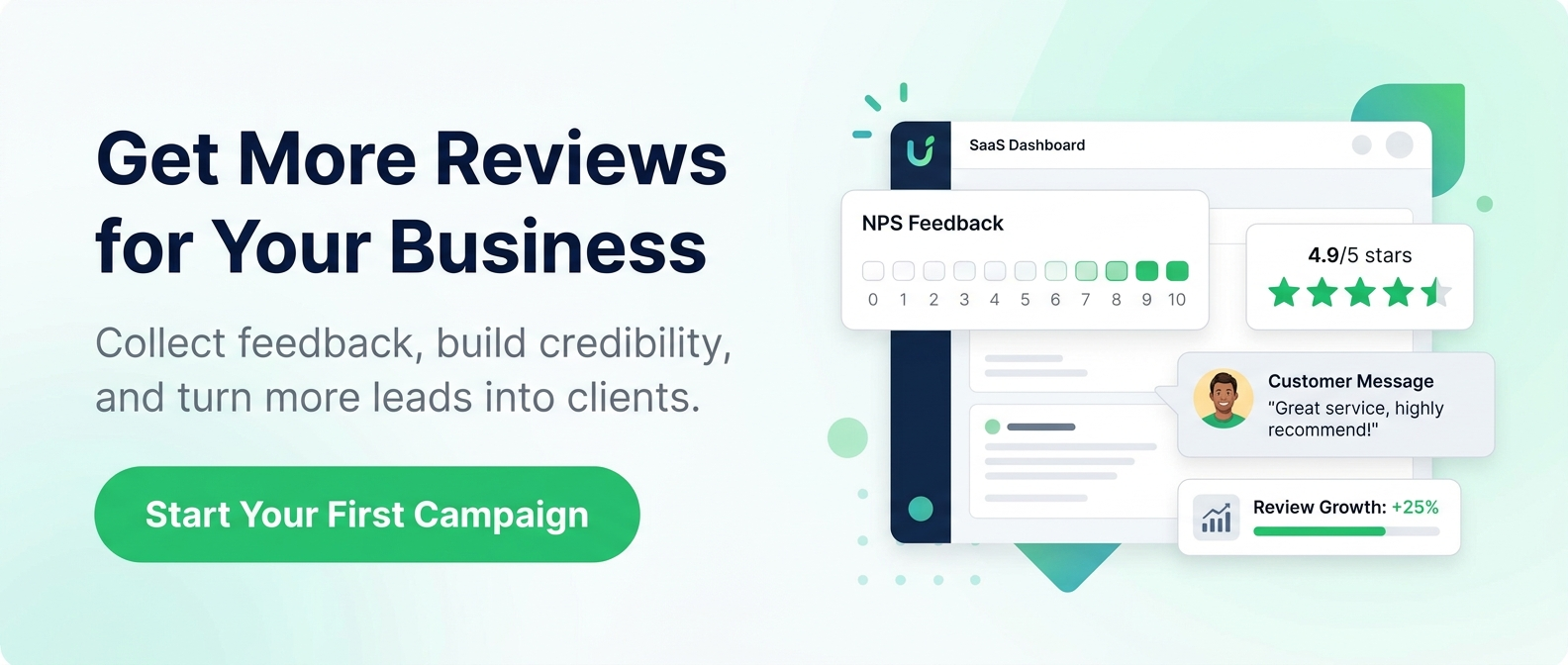
The impact of simply asking is significant. According to GatherUp, businesses that actively request reviews average 122 reviews per location, compared to just 53 for locations where no request is made. Most customers who leave reviews do so only after being prompted. A campaign gives a business the infrastructure to ask every customer, every time, without relying on individual staff members to remember or feel comfortable raising the topic.
How the Review Request Process Is Structured
A review request workflow moves through several connected stages, each of which influences the one that follows. A request that arrives too early or too late, uses the wrong channel, or asks for too much at once will lose the customer before they ever reach the review platform. The sequence should feel natural at every touchpoint, which requires planning at the campaign level, not just the message level.
Choosing the Right Trigger Points
A trigger is the event that initiates the review request sequence. The most effective triggers are moments when the customer’s experience is freshest and most positive, typically a completed purchase, a delivered service, a resolved support interaction, or a finished appointment. Identifying the best time to ask customers for a review means mapping the request to the right point in the customer journey, not simply picking an arbitrary day of the week.
Sequencing Follow-Up Messages
A single message will not reach every customer. Some will open the email but not click; others will miss the first message entirely. A multi-step sequence handles these non-responders by sending timed follow-ups that feel gentle rather than repetitive.
Understanding how to ask for reviews without annoying customers comes down to spacing, brevity, and smart suppression logic. If a customer submits a review after the first message, they should be removed from the sequence automatically so they never receive a redundant follow-up.
Review Request Sequence: Message Structure Overview
| Message | Purpose | Audience | Key Principle |
|---|---|---|---|
| Initial request | Prompt customer to leave a review shortly after their experience | All eligible customers | Send while experience is fresh; keep message brief and focused |
| First follow-up | Re-engage customers who opened but did not click | Non-responders after message one | Space adequately; reference the original request gently |
| Second follow-up (optional) | Final nudge for customers who missed earlier messages | Non-responders after message two | Keep tone light; do not send beyond this point |
| Suppression | Remove customers who have already responded | Anyone who submits a review at any stage | Automate removal to prevent redundant or intrusive follow-ups |
How Automated Review Requests Are Delivered and Tracked
Automated review requests are typically delivered by email, sometimes layered with SMS. A well-configured system personalises each message with the customer’s name, the specific service they received, and a direct link to the appropriate review platform. Personalisation is not decorative. It directly improves response rates because customers engage more readily with messages that feel relevant to their experience.
After sending, the three most meaningful performance indicators to track are open rate, which tells you whether the subject line is working; click-through rate, which reveals whether the message is motivating action; and conversion to published reviews, which is the final measure of whether the full sequence is functioning as intended. According to GatherUp, around 30% of customers will act on a well-crafted review request, making this a useful benchmark for evaluating whether your current campaign is reaching its potential.
Key Performance Indicators for Review Request Campaigns
| Metric | What It Measures | What a Low Score Signals |
|---|---|---|
| Open rate | Whether the subject line is compelling enough to get opened | Subject line needs improvement; timing may be off |
| Click-through rate | Whether the message body motivates customers to act | Message content or call-to-action needs refinement |
| Conversion to published reviews | Whether the full sequence produces actual public reviews | Platform routing, friction, or overall sequence needs review |
Review Campaign Best Practices That Improve Results
The variables that most affect campaign performance are often the ones that appear minor at first glance. Writing clear, direct subject lines that reference the customer’s recent experience consistently outperforms vague or promotional alternatives. Keeping messages brief and focused on a single action prevents the request from feeling like a sales pitch. Optimising for mobile is essential, as most customers read email on a mobile device, and every message should be tested for mobile display before going live.
One of the most effective structural decisions is adding an NPS survey layer before directing customers to a public platform. Rather than routing all customers to Google or Yelp immediately, the NPS step gauges satisfaction on a zero-to-ten scale. Customers who score highly are directed to leave a public review; those with lower scores are routed to a private feedback channel. This protects your public reputation while still capturing useful insight from dissatisfied customers.
Research from the Spiegel Research Center found that displaying reviews can increase conversion rates by up to 270%, which makes the strategic routing of satisfied customers to public platforms a decision with meaningful commercial impact.
Where Review Request Campaigns Often Fall Short
Even well-designed campaigns encounter realistic limitations. Response rates vary by industry, customer type, and channel. Some audiences respond better to SMS than email, or vice versa. This is especially relevant in a diverse market like Metro Vancouver, where communication preferences can differ significantly across neighbourhoods and service areas.
Platform-specific restrictions add another layer of complexity. Google prohibits incentivising reviews or selectively soliciting only positive feedback. Violating these guidelines can result in review removal or account-level penalties, which can undo months of effort. Before launching any campaign, verify compliance with the policies of every platform where reviews will be directed.
Offering discounts, prizes, or other rewards in exchange for a review is prohibited by most major platforms and erodes the authenticity that makes reviews valuable in the first place. Both positive and negative reviews contribute to perceived credibility, and a pattern of uniformly perfect ratings can actually reduce consumer trust rather than build it.
When to Use a Done-for-You Setup Instead of Self-Managing
Self-managing a review campaign is feasible for teams with dedicated marketing resources and experience in email automation. For many small and mid-sized businesses in Vancouver, whether operating in Kitsilano, Burnaby, Surrey, or the North Shore, the combination of copywriting, platform integration, sequence logic, and ongoing monitoring represents a significant time investment.
When a team lacks the bandwidth to build and maintain the campaign properly, a done-for-you setup typically produces better results than a self-serve approach that is launched and then left without optimisation. A full-service setup covers account configuration, customer import, message template creation, platform routing, and day-to-day campaign management. Business owners are involved in the early stages to provide context, but freed from the operational workload thereafter. This model suits businesses that want structured results without managing the process internally.
How Upperly Supports Review Collection for Vancouver Businesses
Upperly is built specifically to support structured, automated review collection for Canadian businesses. For teams operating in competitive local markets like Vancouver, the platform handles the end-to-end process of requesting, routing, and tracking customer reviews across Google, Facebook, Yelp, and the BBB.
The automated system sends personalised email campaigns triggered by customer interactions, while an integrated NPS survey layer filters feedback before it reaches public platforms, protecting reputation while capturing actionable insight. Upperly also offers employee-level feedback tracking, which ties customer responses to specific team members and supports both training decisions and recognition programmes.
The platform’s flexible pay-as-you-go model removes the barrier of a mandatory subscription. Teams can start with a basic package and scale email send volume as campaigns grow, with no long-term commitment required. If your team is ready to move from ad hoc review requests to a consistent, measurable campaign, Upperly’s setup process is designed to get you there without unnecessary complexity.
Frequently Asked Questions
What is the best time to send a review request?
Send the request shortly after a positive customer interaction, such as a completed purchase, delivered service, or resolved support case. Reaching out while the experience is still fresh improves both open rates and the likelihood of follow-through. Waiting several days or weeks reduces emotional connection and lowers response rates.
How many follow-up messages should a review request sequence include?
Most effective sequences include two to three messages: an initial request followed by one or two timed follow-ups for non-responders. Customers who respond at any stage should be removed from the sequence automatically. More than three messages tends to feel intrusive and can damage the customer relationship.
Is it against the rules to offer rewards for leaving a review?
Yes. Offering discounts, prizes, or any incentive in exchange for a review violates the policies of Google, Yelp, and most major review platforms. Incentivised reviews can be removed, and repeated violations may result in account-level penalties. Reviews should be requested genuinely, with no conditions attached to the outcome.
What is an NPS survey and why is it used in review campaigns?
An NPS (Net Promoter Score) survey asks customers to rate their experience on a scale of zero to ten before being directed to a public review platform. Customers with high scores are routed to Google or another public platform; those with lower scores are directed to a private feedback channel. This protects your public reputation while still capturing insight from less satisfied customers.
How do I know if my review request campaign is performing well?
Track three indicators: open rate, click-through rate, and conversion to published reviews. Open rate shows whether subject lines are effective; click-through rate shows whether the message motivates action; and published review conversion is the ultimate measure of success. GatherUp suggests that roughly 30% of customers will act on a well-crafted request, making this a useful starting benchmark.
When does it make sense to use a managed review campaign service?
A managed service is worth considering when your team does not have the time or expertise to build, monitor, and optimise a campaign consistently. For small and mid-sized businesses in Vancouver and across Canada, outsourcing the operational workload while staying involved in setup often produces better and more consistent results than a self-serve approach that is launched and left unattended.
Social Share


How CRM Integration Makes NPS Feedback Drive Retention
Key Takeaways Connecting NPS survey responses directly to your CRM transforms isolated scores into actionable retention signals that your sales and account management teams can…


When Is the Best Time to Ask Customers for a Review?
Key Takeaways Asking customers for a review at the right moment after their purchase dramatically increases response rates and the quality of feedback your business…

Responding to Negative Google Reviews
When you ask our customers for reviews, you should know that all feedback will not be positive. There are those who give negative google reviews…

How to grow positive google review?
It's important for all businesses to get positive google review through customers. Getting positive google review brings a lot of business benefits, which is most…