

 Home
HomeHow to Ask for Reviews Without Annoying Customers

 Category:Articles
 June 10, 2026 / AT: 12:23 PM
 108 View
 No Comment
Key Takeaways
Small business owners can collect more reviews consistently by focusing on timing, tone, and context to make every request feel natural and respectful.
- Ask for a review shortly after a positive experience, ideally within hours for a service or one to three days after product delivery, while the moment is still fresh in the customer’s mind.
- Match the tone of your request to your existing customer relationship; specific and personal wording, even in automated messages, converts far better than generic template blasts.
- Use an NPS survey as a first step for customers who had a mixed experience, routing satisfied customers to public review platforms and routing others to a private feedback channel to protect your reputation.
- Automation removes the burden of remembering to ask but must be configured carefully with frequency limits, personalisation fields, and a clear unsubscribe option to stay respectful and effective.
- Avoid over messaging, vague subject lines, and incentivising reviews, as these mistakes violate platform policies and erode the customer trust you worked to build.
Every small business owner knows that online reviews matter, but far fewer feel confident asking for them without coming across as pushy or desperate. Getting this right is less about scripting the perfect message and more about understanding when, how, and in what context to reach out. A well-timed review request feels like a natural extension of a positive experience, not an unwanted obligation dropped into someone’s inbox.
According to BrightLocal, 96% of consumers read online reviews at least some of the time. Your reputation is almost certainly being evaluated before a potential customer ever contacts you, making thoughtful review collection a genuine business priority, especially in competitive local markets like Vancouver.
What Makes a Review Request Feel Pushy
Most business owners focus on the outcome, the star rating, but how you ask has consequences that go well beyond your average score. A poorly timed message, a vague call to action, or a third automated reminder in two weeks can leave a customer feeling pressured rather than appreciated. That friction quietly chips away at the trust you worked hard to build.
Review request etiquette reflects how much you respect your customer’s time and emotional state. A request that arrives when a customer is still in the glow of a positive experience feels natural. One that arrives after a delay, during a dispute, or for the third time in a row feels tone-deaf. Businesses that consistently earn strong reviews treat feedback collection as a relationship touchpoint, not a conversion tactic.
The Three Principles Behind Non-Intrusive Review Requests
The most important mindset shift is this: you are not asking for a favour. You are creating a moment for a satisfied customer to share something they likely already feel. That reframing changes everything, from the words you choose to the channel you use.
Three variables shape whether a request feels helpful or irritating: timing, tone, and context. Ask while the experience is still fresh and positive. Match your language to how your customers already communicate with your brand. And make sure the request is anchored in a real, recent interaction.
Research from the Harvard Business Review confirms that ideal timing varies by business type. There is no single formula. What matters is that every request connects to a genuine customer experience.
When to Ask for a Review
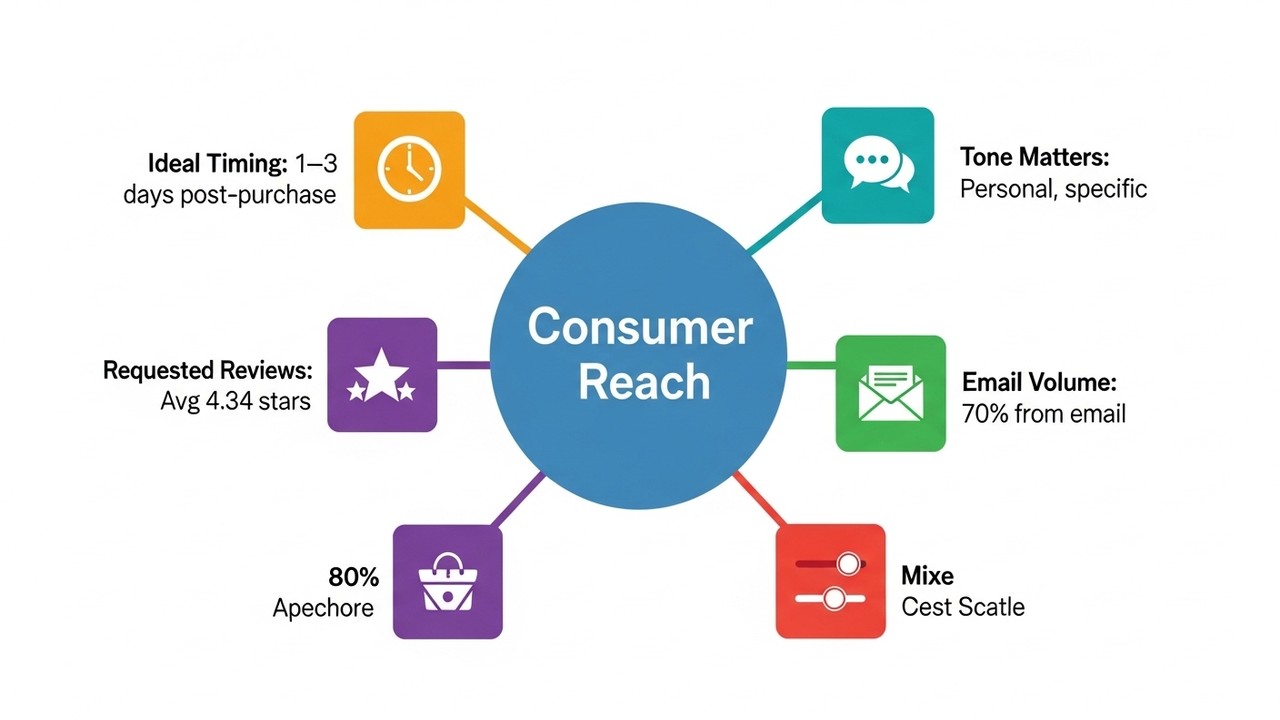
The best time to ask for a review is within a short window after the positive moment has occurred. For a product purchase, aim for one to three days after confirmed delivery. For a service interaction, reach out within a few hours of the appointment closing. This is when the experience is fresh, the customer is satisfied, and writing a few sentences feels proportionate to the value they received.
Urgency matters less than relevance. Build your process around the customer’s experience, not your sending schedule.
How the Tone of a Review Request Should Sound
A legal services firm in downtown Vancouver and a neighbourhood yoga studio in Kitsilano have very different customer relationships, and their review requests should reflect that. Formality, sentence length, and warmth should mirror how customers already communicate with your brand.
Effective review asks are specific and personal in tone, even when sent at scale. Referencing the type of service received or acknowledging a specific touchpoint transforms a generic message into something that feels considered. That does not require heavy manual effort. It requires smart setup from the start.
Polite Review Request Examples That Work
The most effective, non-pushy messages are short, explain why the review matters, make the action easy, and express genuine appreciation regardless of whether the customer follows through.
Email: “Hi [First Name], thank you for choosing us for [service/product]. We hope everything went smoothly. If you have a moment, we would really appreciate you sharing your experience on Google. It helps other customers like you find us, and it helps us keep improving. Here is the direct link: [link]. Thank you, no pressure at all.”
SMS: “Hi [First Name], thanks for visiting us recently. If you enjoyed your experience, would you mind leaving us a quick Google review? It takes about 60 seconds and means a lot to a small business like ours. [link]”
What separates these from generic template blasts is the acknowledgment that the customer is doing you a favour, not fulfilling an obligation. That subtle framing reduces resistance and increases the likelihood of a sincere, detailed response.
According to ReviewTrackers, reviews generated from direct business requests average 4.34 stars, compared to 3.89 stars for unprompted reviews. A well-crafted, polite ask does not just increase volume. It tends to improve quality too.
| Channel | Best For | Typical Tone | Key Advantage |
|---|---|---|---|
| Longer customer relationships, product purchases | Warm, conversational | Room for context and a direct review link | |
| SMS | Service-based businesses, personal interactions | Brief, friendly | Higher open rates and faster responses |

Using Automation to Request Reviews at Scale
Automation removes the single biggest barrier to consistent review collection: remembering to ask. For a small business owner juggling operations, staff, and customer service, manual outreach is not sustainable. Automated review collection lets you set up a process once and let it run in the background, reaching customers at the right moment without ongoing effort.
A well-configured message that includes the customer’s name, a reference to their recent interaction, and a direct review link reads as thoughtfully personal. The automation is invisible when the setup is done correctly. Platforms like Upperly are built specifically for this, combining automated email campaigns with NPS survey tools so satisfied customers are guided naturally toward leaving a public review, while mixed-experience customers are identified early for follow-up.
Essential Setup Steps Before Sending Automated Review Requests
Before launching any automated campaign, these settings are essential to protect the customer experience:
- Set a message frequency limit so no customer receives more than one request per transaction or visit.
- Include a clear, easy unsubscribe option in every message.
- Use personalisation fields, at minimum first name and service type, to prevent messages from reading as mass blasts.
- Test your send timing to align with when customers are most likely to have completed and reflected on their experience.
These are not optional extras. They are the difference between automation that builds your reputation and automation that damages it.
Adjusting Your Approach for Different Customer Types
Review request etiquette should shift based on who you are contacting. A first-time customer needs a lighter touch than a loyal returning one. Someone who had a flawless experience is a different conversation from someone who flagged a concern that was later resolved.
For customers who may have had a mixed experience, start with an NPS survey rather than a direct public review request. NPS surveys ask customers to rate their likelihood of recommending your business on a scale of zero to ten. This lower-pressure format identifies satisfied customers who can then be directed to Google, Facebook, Yelp, or the BBB, while routing less satisfied customers toward a private feedback channel instead.
This approach protects your public reputation and gives you the insight needed to retain at-risk customers before they disengage. As Survicate research notes, only 1 in 26 unhappy customers will complain directly. The rest stay silent and are likely to churn. Early detection through NPS can be a meaningful retention tool.
| Customer Type | Recommended Approach | Suggested Channel | Goal |
|---|---|---|---|
| First-time customer, positive experience | Polite, low-pressure review request | Email or SMS | Build initial review volume |
| Loyal returning customer | Direct, warm review request | Email or SMS | Leverage established trust |
| Customer with a mixed experience | NPS survey first, then route based on score | Protect public reputation, retain customer | |
| Customer who raised a resolved concern | Private feedback channel before any public ask | Confirm satisfaction before seeking a review |

Common Mistakes That Turn a Polite Request Into a Bad Experience
Sending too many follow-ups is the fastest way to train customers to ignore or unsubscribe from your communications. Vague subject lines such as “We need your feedback” create friction because the customer does not know what you want or how long it will take. And offering rewards for reviews directly violates the policies of Google, Yelp, and most major platforms, putting your account and existing reviews at risk.
Before launching any review request campaign, review the solicitation guidelines of each platform you plan to use. Each has its own rules around acceptable asks, and those policies change periodically. Understanding how review request campaigns work within each platform’s framework keeps your strategy both effective and compliant.
Building a Review Process That Runs Without Ongoing Effort
A sustainable review collection process does not need to be complex. It needs to be repeatable, customer-respectful, and low-maintenance. According to ReviewTrackers, 70% of reviews come from post-transactional review request emails, meaning a single well-configured email workflow can account for the majority of your review volume if it is set up correctly and maintained consistently.
Upperly’s pay-as-you-go model is particularly well-suited to Vancouver small business owners who want to start building their review process without committing to an expensive monthly subscription. With packages starting as low as $20 CAD and no mandatory subscription required, you can scale your request volume as your business grows. The platform’s done-for-you setup option also means busy owners do not need to configure everything themselves.
Ready to start collecting more reviews without the awkwardness or the manual effort? Explore how Upperly can help your Vancouver business build a stronger online reputation, one genuine customer review at a time.
Frequently Asked Questions
How many times should a business follow up on a review request?
Once is generally enough. A single follow-up sent a few days after the initial request is reasonable, but anything beyond that risks frustrating customers. If someone has not responded after two messages, respect that and move on.
Is it against the rules to ask customers for Google reviews?
No. Asking for reviews is permitted on Google, provided you do not offer incentives or selectively target customers you expect will leave positive feedback. Google’s guidelines prohibit review gating, which is the practice of filtering customers before directing them to leave a public review.
What channel works best for sending review requests, email or SMS?
Both work well depending on your business type and customer preferences. SMS tends to get higher open rates and faster responses, making it effective for service-based businesses. Email allows for more context and works well for longer customer relationships or when you want to include a direct review link alongside other follow-up information.
Should you ask for reviews on every platform at the same time?
No. Focus on one platform at a time, typically the one most important to your local visibility, such as Google. Asking customers to review you across multiple platforms in a single message creates decision fatigue and reduces the chance they will act on any of them.
Can small businesses in Vancouver use review request tools without technical expertise?
Yes. Platforms like Upperly offer done-for-you setup options that require no technical background. You provide basic business and customer information, and the platform handles messaging, timing, and delivery on your behalf.
Social Share


How to Choose NPS Software That Drives Real Retention
Key Takeaways A structured framework for CX managers in Vancouver to evaluate NPS software based on delivery, reporting, CASL compliance, pricing, and setup support for…

How Online Reviews Shape Customer Trust and Buying Decisions
Online reviews are now the primary trust signal for small businesses, directly shaping whether potential customers contact you or choose a competitor. 93% of…

Increase your Google organic stars
The best way that you can get more organic stars is that ask from your costumers. Make customers conscious that they can review and star…

How to get 5 stars?
Research shows that a brand that has been able to receive stars will be more noticeable than competitors. That's why it's important to get stars…