

 Home
HomeHow to Reduce Negative Reviews With Better Follow-Up
 Category:Articles
 June 20, 2026 / AT: 10:03 AM
 291 View
 No Comment
Key Takeaways
Structured follow-up processes that acknowledge and resolve complaints quickly are the most effective way to prevent dissatisfied customers from posting negative reviews publicly.
- Communication failures including slow response times and poor follow-up are the primary driver of negative reviews, outranking product quality and pricing as root causes.
- A three-step follow-up sequence covering initial acknowledgment, resolution check-in, and satisfaction confirmation creates a consistent rhythm that reduces the chance of a complaint going public.
- Timing is critical: a follow-up message after a bad experience delivered within hours carries significantly more weight than one sent days later, after the customer has already formed a final opinion.
- Net Promoter Score surveys create a private channel for dissatisfied customers to express concerns early, giving businesses the opportunity to intervene before a review is posted.
- It takes 10 to 12 positive reviews to counteract the reputational damage of a single negative one, making prevention through consistent follow-up a far more efficient investment than reactive reputation repair.
Most businesses treat negative reviews as a public relations problem. They craft a polished response, hope the reviewer moves on, and consider the matter closed. But by the time a review is posted, the opportunity to prevent it has already passed. The real work happens in the hours and days after a customer raises a concern, and how your team responds during that window determines whether the experience stays private or becomes a public record.
For Customer Experience Managers in Vancouver and across British Columbia, this distinction is not theoretical. Review sentiment has a measurable impact on revenue, credibility, and long-term retention. According to Pew Research Center, 82% of U.S. adults check online reviews before making a purchase, and Canadian consumers follow closely. In a competitive market like Vancouver, where word of mouth travels quickly across neighbourhoods from Kitsilano to Commercial Drive, a single negative post can influence many decisions. Intercepting it before it goes public has clear, immediate value.
Why Negative Reviews Often Come Down to What Happens After
There is a common misconception that negative reviews are primarily about product failures or service errors. Research tells a different story.
Communication issues, including slow response times and poor follow-up, outrank both product quality and pricing as the primary driver of negative reviews, according to a study published by UpFirst AI. This reframes the problem entirely: the issue is often not what went wrong, but what was never communicated afterward.
Customers who feel heard are significantly less likely to escalate their frustration publicly. When a business acknowledges a problem quickly and follows through on resolution, it interrupts the emotional momentum that typically leads to a review being posted. Understanding why customers leave negative reviews begins with recognising that most dissatisfied customers are not trying to damage a reputation. They want to feel that their experience mattered. When that acknowledgment never arrives, a public platform becomes the only outlet available to them.
The Link Between Follow-Up Timing and Review Behaviour
Timing is one of the most significant variables in complaint management. Follow-up that arrives within a few hours carries far more weight than one delivered two days later, after the customer has already decided how they feel. The emotional window between a complaint and a written review is often shorter than businesses expect, and the quality of communication during that period directly shapes the outcome.
Consumers are 50% more likely to share bad interactions on social media and 52% more likely to post them on a review site than positive experiences, according to research from Reputation X. That asymmetry means a single unresolved complaint carries disproportionate public risk. Acting within that window, before the customer turns to a review platform, is where the real leverage lies.
What Actually Triggers a Negative Post
Customers default to public platforms when they feel unheard. Posting a review is rarely their first action. Most will attempt to resolve an issue directly through a complaint, an email, or a conversation with staff. When that attempt is ignored or handled poorly, a public review becomes both an outlet and a form of leverage.
A simple acknowledgment, delivered with genuine intent, can interrupt that impulse before it escalates. The acknowledgment does not need to solve everything immediately. It needs to demonstrate that the business is paying attention and taking the matter seriously.
Follow-Up Processes That Help Prevent Negative Reviews
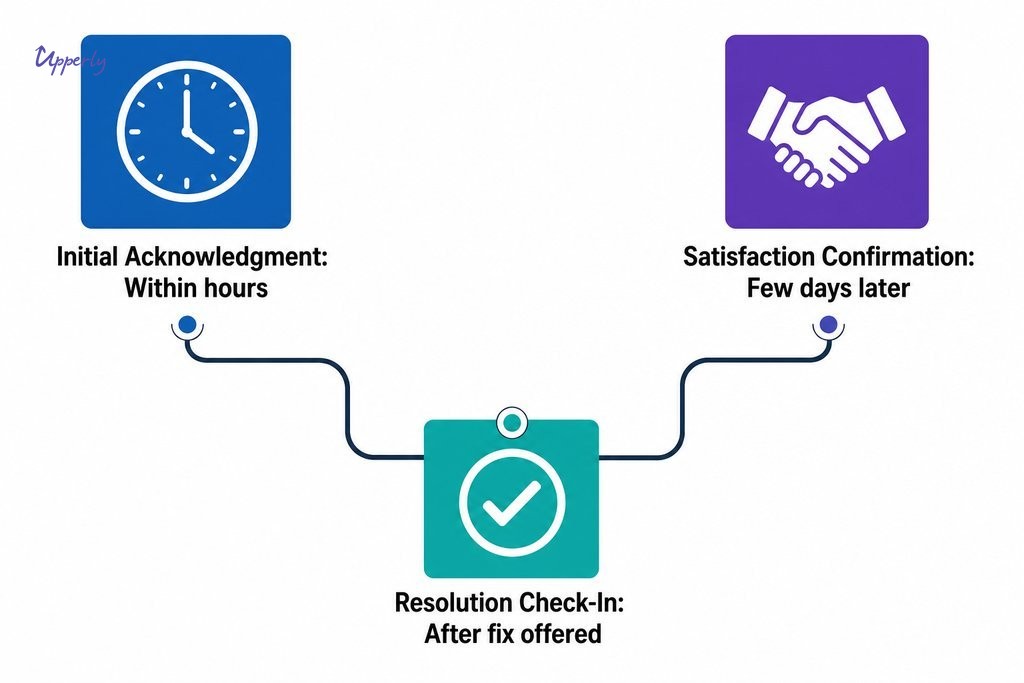
A structured follow-up sequence does not need to be elaborate. It needs to be consistent and genuinely human in tone. The approach that works best for most service-based businesses operates across three clear touchpoints:
- Initial acknowledgment — sent within hours of the complaint, confirming the message was received and that someone will follow up
- Resolution check-in — sent once a solution has been offered or implemented, asking directly whether the outcome was satisfactory
- Satisfaction confirmation — sent a few days later, closing the loop and giving the customer a natural moment to reconsider how they feel about the experience overall
Together, these touchpoints create a rhythm that signals commitment rather than damage control.
| Touchpoint | Timing | Purpose | Key Action |
|---|---|---|---|
| Initial acknowledgment | Within hours of complaint | Confirm receipt and signal attention | Personalised message confirming follow-up is coming |
| Resolution check-in | Once solution is offered or implemented | Verify the customer is satisfied with the outcome | Direct question asking whether the resolution met their expectations |
| Satisfaction confirmation | A few days after resolution | Close the loop and invite reconsideration | Brief follow-up giving the customer a natural moment to reflect |
What a Follow-Up Message After a Bad Experience Should Include
A follow-up message must feel personal to be effective. Generic phrasing like “we take all feedback seriously” signals a template, not a conversation, and many customers will disengage immediately.
An effective follow-up message should reference the specific issue the customer raised, use the customer’s name, be written in plain conversational language, and acknowledge the emotional impact before offering a solution.
Common mistakes include leading with policy explanations, offering discounts before acknowledging frustration, or asking for an updated review before the customer has confirmed they are satisfied. Each of these signals that the business is prioritising its own reputation over the customer’s experience, which is the opposite of what drives a genuine recovery. Keep the focus on the customer first, and the review outcome will follow naturally.

Using NPS Surveys to Catch Dissatisfaction Before It Goes Public
One of the most reliable ways to prevent negative reviews is to identify at-risk customers before they make a posting decision.
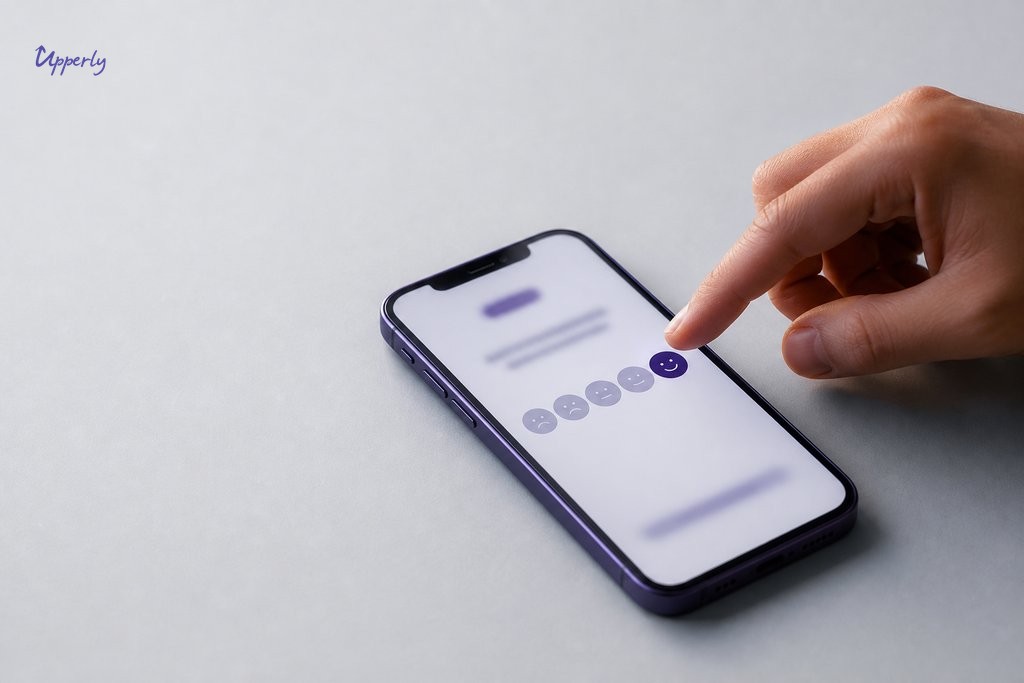
Net Promoter Score (NPS) surveys are particularly effective for this because they create a structured moment for customers to express dissatisfaction privately. Customers who score between 0 and 6 are classified as detractors, and each low response signals someone at risk of writing a negative review if nothing changes.
Automated feedback collection through a platform like Upperly ensures that this signal reaches the right person quickly, rather than sitting in a report that nobody checks until after a review has been posted.
It is worth noting that 33% of upset customers will consider revising their negative review if the issue is resolved quickly, and customer churn increases by approximately 15% when businesses do not respond at all, according to research from Guaranteed Removals. NPS tools give businesses the data they need to act before either of those outcomes occurs.
Turning a Low NPS Score Into a Service Recovery Trigger
A low NPS score sitting unread in a dashboard offers no value. The score only becomes useful when it automatically triggers a response.
Upperly’s platform routes low-score responses into a direct follow-up workflow, ensuring that a detractor receives personal outreach within a meaningful timeframe rather than waiting for a weekly review meeting. This automated routing is what separates a system that consistently reduces negative reviews from one that relies on a team member remembering to check. The speed of the response determines whether the recovery lands while it still can.
Building a Repeatable System to Reduce Negative Reviews
One-off recovery efforts can save individual customer relationships, but they do not reduce the overall volume of negative reviews at scale. What makes a sustained difference is a repeatable process that every customer interaction passes through, regardless of which team member is involved.
This means maintaining documented follow-up sequences with clear ownership, consistent messaging standards across the team, and regular review of where communication breakdowns are occurring.
Upperly’s employee-level feedback feature adds a layer of precision by attributing satisfaction data to specific team members, helping identify whether service gaps are systemic or concentrated in particular areas of the business.
Research published by the Academy of Marketing Science found that firms actively engaging with customer feedback can expect meaningful differentiation benefits, as prospective customers often view responsiveness as a sign of customer-centric values. For Vancouver businesses operating in service-driven industries, where client expectations are high and local competition is strong, building that responsiveness into a system rather than treating it as an ad hoc task is what turns individual recovery moments into a measurable reputation trend over time.
| System Element | What It Involves | Why It Matters |
|---|---|---|
| Documented follow-up sequences | Clear scripts and timing guidelines for each touchpoint | Ensures consistency regardless of which team member responds |
| Clear ownership | Assigned responsibility for monitoring and acting on complaints | Prevents concerns from going unaddressed due to unclear accountability |
| Consistent messaging standards | Tone, language, and structure guidelines for the team | Keeps communications feeling human and on-brand across all interactions |
| Employee-level feedback attribution | Satisfaction data linked to specific team members | Identifies whether service gaps are systemic or role-specific |
| Regular communication reviews | Periodic audits of where breakdowns are occurring | Supports continuous improvement and early pattern recognition |
What to Realistically Expect From Service Recovery
Structured follow-up will not eliminate negative reviews entirely. Not every complaint will be resolved to the customer’s satisfaction, and not every reviewer will reconsider a post even after a genuine recovery effort.
What a consistent follow-up process does accomplish is reducing the frequency of preventable negative reviews and improving the overall trajectory of your review profile. It takes roughly 10 to 12 positive reviews to counteract the reputational damage of a single negative one, according to research from Vision Critical. That ratio makes prevention a far more efficient investment than reputation repair after the fact.
The goal is not to guarantee a perfect rating. The goal is to demonstrate consistently that your business responds to concerns with care and accountability, which builds the kind of trust that influences prospective customers even when a negative review remains visible. Learning from negative review patterns over time is a separate discipline, but it starts with having enough structured data to see where patterns exist in the first place.
Getting Started Without Overcomplicating the Process
For businesses at any stage, the most effective starting point is also the simplest: send a follow-up message to every customer who raises a concern, within 24 hours, every time. That one habit alone will produce a noticeable shift in how many complaints convert into public reviews.
From there, adding an automated NPS survey into your post-purchase or post-service workflow gives you the early-warning data needed to act before dissatisfaction has time to compound.
Upperly is built for this kind of straightforward implementation. There is no mandatory subscription required, so businesses, whether you are running a boutique in Mount Pleasant or a service firm in Burnaby, can start with a focused email volume that fits your current capacity and scale from there. The done-for-you setup option means even a small team with limited resources can have a functioning follow-up system in place quickly.
In the first 30 days, prioritise consistency over complexity: get the acknowledgment timing right, establish who owns the follow-up process, and start collecting NPS data so you have a baseline to measure against. Small, consistent actions taken early create the reputation results that compound over months.
If you are ready to build a follow-up system that genuinely reduces negative reviews and strengthens customer trust, Upperly can help you get there without the overwhelm. Reach out today to explore which approach fits your business best.
Frequently Asked Questions
How quickly should a business follow up after a customer complaint?
Follow-up should happen within a few hours of receiving a complaint, not the next business day. The emotional window between a complaint and a public review closes faster than most businesses expect. An acknowledgment sent the same day signals that the concern matters, which is often enough to prevent escalation to a public platform.
Can a negative review be prevented after it has already been written?
Once a review is posted, prevention is no longer an option, but recovery still is. Research suggests that approximately 33% of upset customers will consider revising a negative review when the issue is resolved promptly. Reaching out directly, acknowledging the experience, and demonstrating a genuine resolution gives the reviewer a reason to reconsider.
What is an NPS survey and how does it help reduce negative reviews?
A Net Promoter Score (NPS) survey asks customers how likely they are to recommend your business on a scale of 0 to 10. Respondents scoring between 0 and 6 are considered detractors, meaning customers at risk of posting negatively. Identifying them through a private survey creates an opportunity to resolve their concerns before they turn to a public review platform.
What should a follow-up message after a complaint actually say?
It should open by acknowledging the specific issue the customer raised, use their name, and express genuine concern before offering any resolution. Avoid template-sounding language and policy explanations. The message should feel like a direct, human response rather than a scripted reply, because customers can distinguish between the two very quickly.
Does responding to negative reviews reduce the damage they cause?
Yes. Responding publicly signals to prospective customers that your business takes accountability seriously. While it does not remove the original post, a thoughtful response can offset its impact, especially when other reviews reflect a pattern of attentive service. The Academy of Marketing Science notes that active engagement with feedback is associated with stronger customer-centric perception.
How many positive reviews does it take to offset one negative review?
Research from Vision Critical indicates it takes roughly 10 to 12 positive reviews to counteract the reputational effect of a single negative one. This ratio underscores why prevention is more cost-effective than volume-based repair strategies. A structured follow-up process that reduces preventable negatives has a compounding effect on your overall review profile over time.
Social Share


Create a reputation strategy
Create a reputation strategy is very important for all businesses. Creating an online reputation strategy is dependent on the requirements of the organization and business.…

Smart Questions to Ask Before Buying Review Software
Key Takeaways Ask the right questions about data ownership, pricing, automation, and integrations before committing to any review software platform. Every question you bring into…

Employee Performance Management
In today's competitive world, companies need to take different steps to succeed. One of the most important of these is the performance management of employees.…

What is SEO and how can it be improved by getting reviews?
The SEO is derived from the expression "Search Engine Optimization" which has equivalent words such as SEO or search engine optimization, all of which are…