

 Home
HomeWhy Customers Leave Negative Reviews and How to Close the Gaps
 Category:Articles
 June 20, 2026 / AT: 8:40 AM
 1 View
 No Comment
Key Takeaways
Negative reviews follow predictable patterns of unmet expectations and service gaps that businesses can intercept before dissatisfaction goes public.
- Most negative reviews stem from staff behaviour and poor communication rather than product or service quality, meaning frontline interactions are a primary lever for reputation management.
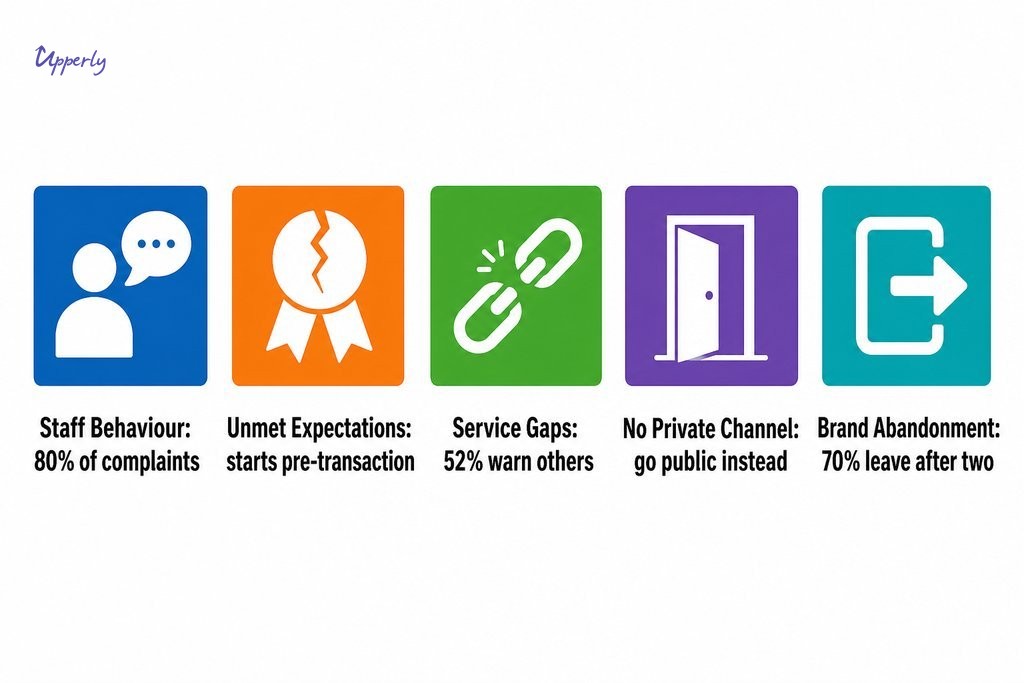
- Dissatisfaction builds gradually; 70% of consumers abandon a brand after just two negative experiences, so each unresolved friction point compounds retention risk over time.
- Pre-transaction touchpoints such as pricing pages, service descriptions, and intake forms often plant the frustration that surfaces later in public reviews, making upstream clarity essential.
- Structured post-service feedback collection gives dissatisfied customers a private channel to voice concerns, redirecting complaints inward before they reach public platforms.
- A drop in public complaints does not confirm service gaps are closed; genuine improvement requires cross-referencing internal NPS scores with public review trends and retention data.
Understanding why customers leave negative reviews is one of the most undervalued skills in customer experience management. Most businesses treat a bad review as a one-off event to manage rather than a signal worth investigating. But negative reviews rarely appear without warning. They follow a pattern of unmet expectations, missed interactions, and operational gaps that accumulate quietly until a customer decides to go public. For Customer Experience Managers in Vancouver, whether serving clients in Kitsilano, Gastown, or the North Shore, learning to read those signals early is where real reputation protection begins.
This article examines the root causes behind customer complaints online, the service gaps that silently fuel dissatisfaction, and the practical steps businesses can take to close those gaps before they surface publicly. It also explores how understanding how online reviews influence customer trust gives businesses a stronger case for acting on feedback proactively rather than reactively.
Why Customers Leave Negative Reviews
Customers leave negative reviews when their experience falls short of what they were led to expect, and when they feel the business either failed to notice or didn’t care. The most common triggers include unmet expectations set by misleading pricing or overpromising during the sales process, poor staff interactions such as rudeness or feeling dismissed, and inconsistent service quality across visits. Customers who raised concerns privately and received no response are also among the most likely to escalate publicly, as are those who received no follow-up after a service was delivered.
Most dissatisfaction builds gradually. A customer who leaves a damaging review has usually experienced at least one earlier frustration they chose not to escalate. By the time they write publicly, their patience has already run out.
According to Emplifi, 70% of consumers will abandon a brand after just two negative experiences, and 24% will leave after only one. Every unresolved service friction is not just a single complaint risk; it is a retention risk that compounds with each additional shortfall.
| Common Trigger | How It Develops | Typical Outcome |
|---|---|---|
| Misleading pricing or overpromising | Customer enters the relationship already cautious | Minor friction later becomes a public complaint |
| Poor staff interaction (rudeness, dismissiveness) | Customer feels unheard during the service encounter | Dissatisfaction escalates directly to a public platform |
| Inconsistent service quality across visits | Trust erodes gradually with each variable experience | Customer stops engaging and warns others |
| No response to a private concern | Customer assumes the business does not care | Next issue goes straight to a public review |
| No follow-up after service delivery | Customer feels forgotten once the transaction is complete | Silent dissatisfaction surfaces in future reviews |
Why Most Businesses Misread the Root Causes
When a negative review lands, the instinctive response is to address what the customer wrote. If they complained about wait times, the answer seems obvious: speed things up. If they mentioned a rude interaction, managers speak to the employee involved. While these responses are reasonable, they target the symptom rather than the system that produced it. The underlying operational or behavioural trigger often remains untouched, which is why the same type of complaint tends to resurface weeks or months later.
Root cause analysis asks a different set of questions. Instead of “what did this customer experience?”, it asks “what process, policy, or behaviour pattern made this experience likely to happen?” Businesses that operate at the symptom level spend enormous energy on reputation repair. Those that operate at the root cause level spend that energy on prevention, and the difference shows up clearly in their long-term review scores and customer retention rates.
Where the Problem Often Starts: Before the Transaction
Some of the most common triggers for unhappy customer reviews begin before a customer ever receives a product or service. Misleading pricing, vague service descriptions, or a complicated onboarding process can set expectations the business simply isn’t built to meet.
A customer who feels misled during the purchase or sign-up phase enters the relationship already cautious. When any friction arises later, that early disappointment amplifies their response. What might otherwise be a minor inconvenience becomes the confirmation of a suspicion they formed at the start.
This pre-transaction friction is particularly difficult to catch because customers rarely report it in the moment. They proceed, hoping things will improve, and only mention it retroactively in a review if the overall experience fails to recover. For Customer Experience Managers, this means review feedback about service delivery sometimes contains frustrations that actually originated in sales copy, pricing pages, or intake forms.

How Staff Behaviour Drives Customer Complaints Online
Individual employee interactions carry more weight than many businesses realise. An analysis of 5,000 negative reviews across 10 industries by Upfirst found that only 20% of negative reviews relate to product or service quality. The majority were driven by staff conduct, including rudeness, perceived incompetence, and discriminatory treatment.
This finding challenges the common assumption that quality control is the primary lever for managing complaints. Tone, attentiveness, and responsiveness during a service interaction can determine whether a frustrated customer raises the issue internally or goes straight to a public platform. A customer who feels heard, even when something has gone wrong, is far more likely to give the business a chance to recover. One who feels dismissed is far more likely to share their experience online.
Service Gaps That Silently Fuel Negative Reviews in Vancouver
Beyond individual incidents, broader operational blind spots consistently generate complaints without businesses ever identifying them in real time. In a competitive market like Vancouver, where customers have no shortage of alternatives across neighbourhoods such as Mount Pleasant, Yaletown, and Commercial Drive, these gaps can quietly erode loyalty before a business even notices.
The most persistent gaps include slow response times to enquiries or follow-up questions, inconsistent follow-through after a service is delivered, and no post-service contact, leaving customers to feel forgotten once the transaction is complete.
These gaps are particularly difficult to catch because customers notice them but rarely flag them directly. Instead, they quietly form a negative impression and carry it until they have a reason to act on it. Consider the customer who sent a follow-up question three days after a service interaction and received no response. They didn’t complain at the time. But when a separate issue arose later, that unacknowledged silence became part of the story they told in their review.
Research from ReviewTrackers found that 52% of consumers said a bad customer service interaction was what convinced them to warn others not to buy specific products or services. Service interaction quality, not just service outcome, determines whether dissatisfaction stays private or goes public.
| Service Gap | Why Customers Don’t Flag It Immediately | How It Surfaces Later |
|---|---|---|
| Slow response to enquiries | Customers wait, assuming a reply will come | Adds to a pattern of being undervalued; mentioned in reviews |
| Inconsistent follow-through after service | Customers assume the business is simply busy | Trust erodes; next friction triggers a public complaint |
| No post-service contact | Customers expect outreach but tolerate its absence initially | Feeling forgotten becomes part of the review narrative |
What Feedback Data Reveals That Individual Complaints Cannot
A single complaint about a long wait might reflect an unusually busy day. A pattern of complaints about wait times across multiple customer touchpoints over several weeks points to a structural problem that demands a structural solution.
Tools like NPS (Net Promoter Score) surveys allow Customer Experience Managers to surface those patterns before they escalate into public complaints. When feedback is collected after each transaction or service interaction, it creates a running picture of where satisfaction is holding and where it is slipping. Employee-level feedback collection adds another layer of detail, allowing managers to identify whether a service gap is systemic or concentrated around specific team members or processes.
This kind of measurement gives CX professionals the evidence they need to act early, rather than explaining publicly visible damage after the fact.
How to Reduce Negative Reviews Before They Go Public
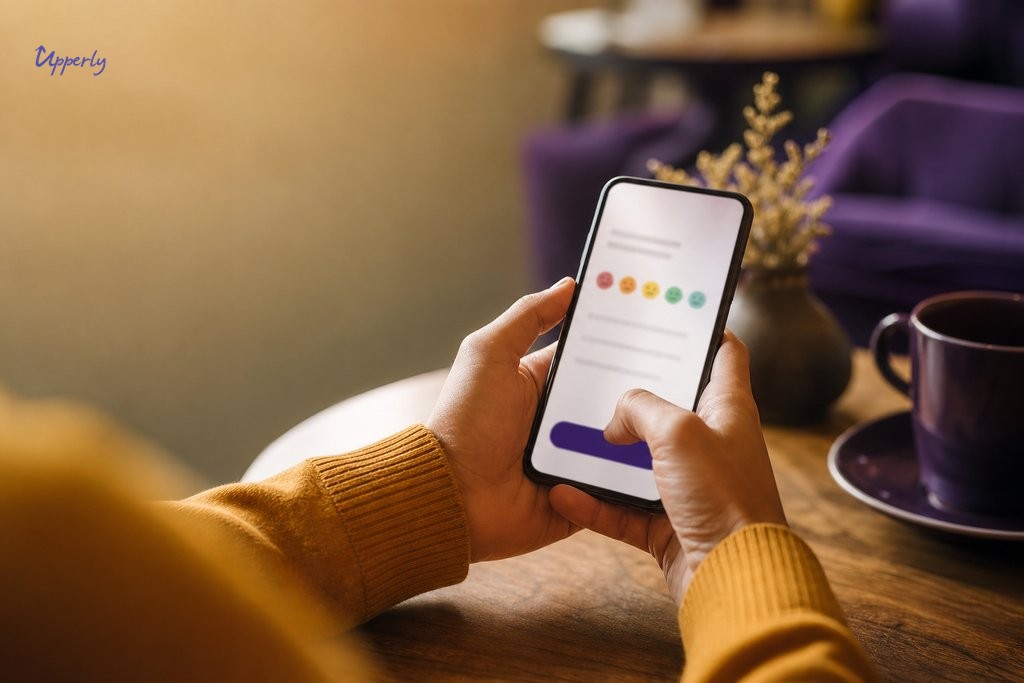
The most effective approach is not to manage negative reviews better after they appear. It is to intercept the dissatisfaction that produces them. Automated feedback collection, sent at the right moment in the customer journey, gives unhappy customers a private channel to express their frustration. When that channel feels genuinely accessible, many customers choose it over a public review platform.
Timing matters. A feedback request sent too late, or framed too generically, is easy to ignore. One that arrives while the experience is still fresh, focused on specific interactions rather than a blanket satisfaction score, is far more likely to surface honest sentiment. This is where structured follow-up becomes practical rather than theoretical. Businesses that follow up with consistency create an environment where dissatisfaction gets directed inward, where it can be addressed, rather than outward, where it accumulates publicly.
Building a Feedback Loop That Works for Vancouver Businesses
A reliable feedback loop requires more than occasional surveys. It needs consistent timing, relevant questions, and a genuine commitment to acting on what comes back. Collecting feedback that never influences a business decision signals to customers that the exercise is performative, and that perception can itself generate cynicism and, eventually, public complaints.
When businesses demonstrate that feedback leads to visible change, customers are more willing to use internal channels in the future. Upperly’s automated review collection and NPS survey tools are designed with this cycle in mind. By reaching customers at consistent points in the journey, routing satisfied respondents toward major review platforms like Google or Facebook while giving dissatisfied ones a direct line to share concerns privately, the process creates a feedback environment that genuinely reflects customer sentiment. Learning how to learn from negative review patterns starts with having enough structured data to identify those patterns reliably.
How to Know Whether a Negative Review Problem Is Actually Solved
A drop in complaints is encouraging, but it is not confirmation that service gaps have been closed. Customers who stop complaining don’t always become satisfied customers. Sometimes they simply stop engaging altogether. According to Upfirst, 49% of consumers say they are unlikely to return to a business after a bad interaction. That kind of silent departure doesn’t show up in review volume, which is precisely why reduced complaint rates can be easy to misread as recovery.
Genuine improvement shows up when internal satisfaction scores rise alongside public review ratings, and when retention metrics hold steady over time. The right approach is to cross-reference NPS scores and employee-level feedback data with what is appearing on Google, Yelp, and other public platforms. Discrepancies between internal scores and external reviews are worth investigating carefully. They often point to gaps in the feedback collection process itself, such as only surveying certain customer segments or sending requests too long after a service interaction to capture accurate sentiment.
If you are looking to understand your customers more clearly, reduce public dissatisfaction, and build a review profile that reflects the real quality of your work, Upperly is built to help you do exactly that. Explore how structured, automated feedback collection can give your team the insight and timing needed to act before problems go public.
Frequently Asked Questions About Negative Reviews
What is the most common reason customers leave negative reviews?
The most common driver is staff behaviour, including rudeness, inattentiveness, and feeling dismissed, rather than product or service quality issues. Research across thousands of reviews consistently shows that how customers are treated during an interaction determines whether dissatisfaction stays private or goes public. A customer who feels heard is far less likely to leave a public complaint.
Can negative reviews be prevented before they are posted?
Yes, in many cases. Automated feedback collection sent shortly after a service interaction gives dissatisfied customers a private channel to express concerns. When that channel feels accessible and genuine, customers often use it instead of a public platform. Timing is critical: feedback requests must arrive while the experience is still fresh and be framed around specific interactions rather than generic satisfaction scores.
How do service gaps differ from individual complaints?
An individual complaint reflects one customer’s experience on one occasion. A service gap is a recurring pattern, such as slow response times, inconsistent follow-up, or no post-service contact, that affects multiple customers without the business noticing in real time. Service gaps only become visible when feedback is collected consistently and reviewed for patterns rather than handled case by case.
Why do some customers leave negative reviews without contacting the business first?
Customers skip internal channels when they expect their concern will be dismissed or ignored, often based on a previous experience where feedback led to no visible change. Customers who received no response to an earlier private concern are significantly more likely to go directly to a public platform the next time something goes wrong.
How can NPS surveys help reduce negative reviews?
NPS surveys capture satisfaction trends across multiple touchpoints over time, revealing where dissatisfaction is building before it escalates publicly. When combined with employee-level feedback, they help managers identify whether a problem is systemic or tied to a specific process or team member, allowing targeted intervention before frustration reaches a public review platform.
Is a drop in negative reviews always a sign of improvement?
Not necessarily. Customers who stop complaining may have simply stopped engaging with the business entirely. Genuine improvement is confirmed when internal satisfaction scores and external review ratings rise together and retention metrics remain stable. If complaint volume drops but public review scores stay flat or decline, the business may be losing customers silently rather than recovering them.
Social Share



What Negative Review Patterns Are Really Telling You
Key Takeaways Customer Experience Managers can turn recurring negative review patterns into operational intelligence by analysing complaint themes systematically rather than reacting to reviews one…


Responding to Negative Google Reviews
When you ask our customers for reviews, you should know that all feedback will not be positive. There are those who give negative google reviews…

Create a reputation strategy
Create a reputation strategy is very important for all businesses. Creating an online reputation strategy is dependent on the requirements of the organization and business.…

Private Feedback vs Public Reviews: What Each Does for Your Business
Key Takeaways Private feedback improves your operations internally, while public reviews build credibility with strangers — and small businesses need both working together to grow.…